Showing posts with label Trailers. Show all posts

Friday, May 14, 2010

I'd rather be in a FEMA trailer in New Orleans than in a penthouse anywhere else

I found the title quote by Gralen Banks;

"I'd rather be in a FEMA trailer in New Orleans than in a penthouse anywhere else,"

in this NPR story I hadn't seen before (or forgot about) reading another NPR Story about Treme.

Echoes of Lafcadio Hearn;

"Times are not good here. The city is crumbling into ashes. It has been buried under taxes and frauds and maladministraions so that it has become a study for archaeologists...but it is better to live here in sackcloth and ashes than to own the whole state of Ohio."
Odd that we now have a couple of from NOLA Blogger expats in Ohio.

Monday, April 19, 2010

The Trailer Two Step

Here we go again. There are still 350 trailers in New Orleans. I am not surprised you can see them scattered in neighborhoods all over the city. A few months ago I was in an unusual (for me) part of town and was surprised to see one. A shortly after that The Times-Picayune ran a story on the few trailers left in Jefferson.

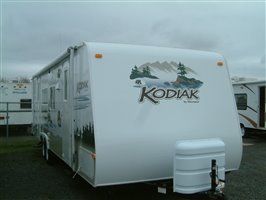
I started this blog to chronicle my life in a FEMA trailer and as self therapy for the dislocation after the flood. I had one of the first trailers. I was lucky because I had power and water at my house, many people didn't. I lived in it for over 2 years.

I had monthly inspections I had to take off from work to meet the FEMA inspector. The trailer gnomes came and did stuff when you weren't around (mostly adding new warning stickers).

I sat through a formaldehyde test, which turned out not to be that bad, although I never was actually warned about formaldehyde. It took months of calling to get the report and I never did actually get the full report, only a summary letter.

There was a tremendous trailer industry. There were installation contracts, electrical contracts, maintenance contracts, inspection contracts. Virtually none of the people involved in these activities was local. I don't think that in the entire time I was in the trailer a single person who came out was local. The same person never came twice. It was a revolving door of government employees and contractors.

In all that time no one ever offered to help me get out of the trailer (except into the rental assistance program). No one offered to help with the road home applications. No one offered to help create a housing plan. No one offered any rebuilding assistance. No one offered help finding contractors. No one offered to coordinate volunteers. No one offered to help me find government programs I was qualified for. No one even left me a brochure in government speak of options I could pursue.

I live in a mostly white, affluent neighborhood, so I may have been profiled or they may have decided I was a low probability to accept help. But my neighborhood is also a neighborhood with lots of elderly residents who could have used help.

If we want to get people out of trailers and into houses, perhaps we need to spend less on contractors and enforcement and a little more on counseling and helping people manage their renovations. Perhaps we should move some of the CDBG money out of making millionaires out of DBEs and into helping actual people.

Sunday, January 17, 2010

Catch 22

In contrast with previous precident here I'm quoting this article extensively since it's an old one, to allow public comment and to point out the absurdity of the Kafkaesque rules regarding "Help" FEMA offers and the compassion local governments extend. I decided to resurrect this from the crypt because the other evening I was driving down Vendome Place uptown for the first time in a probably two years and I was surprised to see there is still a FEMA trailer (or a good approximation of one) still in someone's driveway. There are a few others spotted around town.

FEMA trailer symbol of post-Katrina Catch-22 in Harvey

by Mark Waller, The Times-Picayune
Saturday September 05, 2009, 10:58 PM

Jefferson Parish wants to tear down his house, but a FEMA trailer is in the way. He wants to fix his house, but the parish's demolition order is in the way.


Charles Ayala of Harvey is one of the last FEMA trailer dwellers in Jefferson Parish. The parish has a demolition order against his Second Avenue home for blight, but Ayala says he wants to repair his home.

Charles Ayala's recovery from Hurricane Katrina has descended into one of the most confounding predicaments out of the thousands of people in Jefferson Parish who relied on FEMA trailers.

He is one of the last few residents lingering in a trailer long after Jefferson Parish began suing people, including him, to part with their units. He is fighting a court order to demolish his house because of blight. But the parish is blocked from tearing down the house -- because the federally issued trailer stands in the path of the bulldozers.

"Every beat of misfortune has not missed me since Aug. 29, 2005," Ayala said last week outside his house at 504 Second Avenue in Harvey, where a tree limb punched a hole in the roof during the hurricane and let rain inside. He said he also endured a bout with stomach cancer that forced him to stop working as a convenience-store manager, so he cannot afford to rent an apartment.

Ayala, who turns 49 on Monday, is caught in the waning days of Jefferson Parish's campaign to rid neighborhood streets of trailers, one of the most aggressive such efforts in the New Orleans area. About 10 units remain in unincorporated parts of the parish. More than 18,000 of them dotted Jefferson three years ago.

The Federal Emergency Management Agency itself has ended the trailer program. The cases that remain demonstrate some of the most tangled, intractable problems storm victims have faced.

Ayala said he believes the $67,000 in rebuilding money he received from the state's Road Home program is enough to fix his house. The demolition order, however, prevents him from securing building permits.

'It's not abandoned'

Jefferson Parish Attorney Tom Wilkinson said parish officials do not agree that Ayala's house is salvageable.

"The siding on the building is in disrepair and, in a number of places, the siding is missing, rotted and deteriorated, " says a 2008 petition against Ayala the parish filed in 24th Judicial District Court in Gretna. "There are parts of the structure which are missing the soffit and fascia. Parts of the roof are missing shingles. There are also holes in the roof causing the roof to be open to the weather. The exterior paint is chipping and peeling. The windows are not weather tight. The building also has termite damage and the floor joist is rotten."

Parish attorneys argue Ayala's house is a dangerous nuisance. Judge Steve Windhorst sided with the parish and issued a demolition order. The parish has a separate court order telling Ayala to remove the trailer, in accordance with parish codes against using travel trailers as dwellings in residential neighborhoods.

Ayala said he recently installed a new roof on the house, showing that he is trying make progress on repairing the house and leaving the trailer, which he says gives him nosebleeds because of the formaldehyde used in its construction.

His house last week still had a faded and peeling exterior. The front and rear yards were thick with vegetation, another code violation according to parish officials, but Ayala argued the plants are ornamental.

Ayala says his home now has a new roof on it, but he says he cannot get a permit for more repairs because of the parish's demolition order.


"It's not abandoned, " Ayala said. "It's not neglected. You've got an owner here who cares about his home. You don't go put a brand new roof on your home if you don't care about it."

Matthew Friedman, an assistant parish attorney handling FEMA trailer cases, said Ayala's situation has the parish at a standstill.

"He probably couldn't fix the house with the trailer there, anyway," Friedman said.

Asked whether the parish might sue FEMA to remove its property, he said, "All legal avenues are open."

Legal tangle

A spokeswoman for FEMA referred questions about moving the last trailer residents to the federal Department of Housing and Urban Development, which now manages disaster housing cases. Neill Coleman, a HUD spokesman, said residents can apply for Section 8 housing vouchers to help them secure new accommodations.

Ayala said he previously spoke with FEMA officials about the rental assistance program that has since ended, but he felt he couldn't afford the portion of the rent he would have had to pay.

And, of course, they'll tear down his house if he leaves the trailer.

Alice Riener, an attorney with Southeast Louisiana Legal Services, is helping Ayala try to extract himself from this puzzle, primarily by petitioning the court to remove the demolition order so Ayala can get permits to renovate the house.

Riener argued the parish is placing Ayala in a difficult situation by declaring his house more than 50 percent damaged, requiring him to rebuild under higher codes with greater costs, such as elevating the structure. Noting that the house didn't suffer any flooding, Riener said it is not damaged to such an extent.

"It's a very serious thing to have a house demolished, " she said. "If it gets demolished, he won't have the money to rebuild."

Wilkinson said the parish continues to explore all options for resolving the impasse, but he said: "Our hands are basically tied."

Ayala said stress from the ordeal has caused him to suffer depression and lose weight.

"If all the parish did was get off my back, I could turn my life around, " using the Road Home money, Ayala said.

"They will ruin my life savings; they will ruin my financial future, " he said. "If they succeed, I will be converted into an indigent, homeless pauper."

Wednesday, July 15, 2009

Movie Trailers

One thing living in a FEMA trailer did was make me aware of travel trailers. Before I hardly ever noticed them anywhere. Now I seem them everywhere and all of the time. I even found one Saturday morning on TV.

Around my place Saturday morning is usually spent making breakfast, cleaning up, doing laundry and watching old movies in the background. I think it goes back to my childhood watching Roy Rodgers and Gene Aurtry on Saturday morning.

Usually I've seen the movies many times before, but recently I saw a movie I don't think I've ever seen or head of before Panic In the Year Zero.

It's a pretty tame drive-in movie feature of the time. It begins with a family starting off on a camping trip Mom, Dad, teenage Brother and Sister hauling a travel trailer.


Not long into the Journey there is a flash. Later they see an ominous mushroom cloud. The rest of the movie follows their efforts to survive as society breaks down.


The trailer is never really seen on the inside but it used to hide Mom and Sis, as well as store provisions. Along the way they encounter (and re-encounter) a hardware store owner, his wife, and a band of juvenile delinquents. The cast is pretty small. After setting up in a mountain cave, the hardware store owner finds the trailer and moves in. He then runs into Dad in woods, they plan to get together later. The delinquents attack the hardware store owner and loot the trailer. The family rescues another teenage girl from captivity. Sis is assaulted by the delinquents. They kill the bad guys. It has atomic war, juvenile delinquents, mild bondage, and moral equivocation, perfect.

Anyway it was a hoot and does feature a Kenskill trailer manufactured in California.

Wednesday, April 15, 2009

Formaldehyde revisited

Much has been written about the 'Toxic Trailers" and other stuff. I've written about the issue before and although that post is one of my top hit getters (whatever that means) there have been no comments. FEMA has never suggested to us that our trailer should be tested.


Last fall FEMA was talking us about moving and I asked if we could get ours tested. They said sure, someone will call you and set something up. I wasn't hopeful. FEMA never returns phone calls. I was surprised when they called a couple of days later. We set a date to meet and test the trailer. That was October 28, 2008.

On January 2, 2009 FEMA taped a note to the trailer door, we were on vacation. After we got back we traded phone calls because the person who contacted us said that he needed to meet with us in person to deliver the report. Unfortunately he was out of Baton Rouge was only occasionally in New Orleans and couldn't predict when he would be back. After a couple of tries, he stopped returning calls. He probably was transferred.


A couple of weeks ago I started trying to get a copy of the report. Our New FEMA Person (the only one we've talked to more than once) called. She had the numbers, and more amazingly gave them to me over the phone.

On October 28, 2008 our trailer tested at 63 parts per billion (63 ppb).

She is going to send me a report as soon as she can find it. I'm beginning to think she might.

For perspective I'd like to offer this OSHA regulation;
Permissible Exposure Limit (PEL) -

*1910.1048(c)(1)*

Time-Weighted Average (TWA): The employer shall assure that no employee is exposed to an airborne concentration of formaldehyde which exceeds 0.75 parts formaldehyde per million parts of air (0.75 ppm) as an 8-hour TWA.

*1910.1048(c)(2)*

Short Term Exposure Limit (STEL): The employer shall assure that no employee is exposed to an airborne concentration of formaldehyde which exceeds two parts formaldehyde per million parts of air (2 ppm) as a 15-minute STEL.

According to EPA

Levels in Homes

Average concentrations in older homes without UFFI (Urea-formaldehyde foam insulation) are generally well below 0.1 (ppm). In homes with significant amounts of new pressed wood products, levels can be greater than 0.3 ppm.

Looks like we off gassed down to "normal" levels.

California through the California Air Resources Board has adopted standards that apply to lumber products only, not finished structures. Unfortunately other materials may contribute to Formaldehyde levels in a structure including foam insulation, fabric and carpet, to name a few.

EPA is also proposing some controls although they seem to be following California's lead, and regulating products not finished structures.

Monday, February 25, 2008

FEMA Called


They were taking a survey. They wanted to know;

  1. Had the maintenance contractor contacted us about inspecting the trailer?
  2. Had the maintenance contractor asked us about maintenance of our trailer?
The answers are No and No. The Contractor leaves us monthly maintenance reports stuck to the door about every three months. They do come out when we call them, and check some stuff then.

The trailer gnomes come by from time to time and do stuff, sometimes they paste more instructions to the side of the trailer. Sometimes they insulate our water supply.

Last week they duct taped a notice to our door warning us of Formgehyde. They want us to move, but they don't offer to test the trailer

Come to think of it I think my refer is broken. It recently occurred to me that it was supposed to run on either electricity or propane. The Electric part seems broken. If the propane tanks go empty, the Refer stops working, but if the Refer ran on electricity the tanks should last a very long time, since the only use would be for cooking and heating. We heat water with electricity.

Time to call the Maintenance Contractor.

Saturday, December 15, 2007

Toxic Trailer Political Theater

FEMA's at it again.


We might get tested. Since we're certified I'm sure we'll need meet somebody in a space suit soon.


As a sometime CSPAN junky, usually late at night because She won't let me watch it. She prefers Channel 15, which She sometimes watches for 2 hours straight.

A while ago I surfed across the FEMA Toxic Trailer Hearings late at night . It struck me a very odd. Most of us have known for about 18 months that some people are sensitive to the off gassing of chemicals inside FEMA Trailers. I got an email from paT armsTrong in August of 2006 regarding an MSNBC report. By that time I had been in my trailer about 9 months. There had been other reports before that one.

We have all generally attributed it to Formalgehyde, which is used in the manufacture of virtually every component inside a Travel Trailer. Studies in automobiles and building have shown the familiar smell of new cars or buildings is actually a complex mix of things which dissipates quickly with use. Whether there are other substances mixed in there seems to be of little concern to anyone.


While I don't think FEMA has done much right, some Representatives were pressing FEMA to virtually guarantee that in future there will be no Formalgehyde in FEMA trailers, not an acceptable level, but none. None of them seemed to understand that with time the problem will simply go away. On the other hand no one seems to understand that in some cases these very same Representatives were critical of FEMA's tardiness in delivering trailers in the first place.
That points out a logistical problem. Pretty much everyone agrees that the number of people made homeless by Katrina exceeded anyone's expectation and was not planned for. FEMA did try to respond, they bought every available Travel Trailer in dealer inventories and ordered the accellerated construction of many many new ones. This is probably where some of the problem originated. Now they're being crucified for doing what they were told to do. I can only imagine the uproar if FEMA has said back then "We can't deliver Travel Trailers because they smell bad".Normally as a Travel Trailer moves from construction to use there is a considerable time lag. The materials are produced, shipped to the manufacturing plant and incorporated into the trailer at a fairly leisurely pace. The stuff probably sits around for several weeks at each stage during the process. Once the Travel Trailers are produced they are sent to dealers and often sit around dealer lots for months, open for inspection. The final owner may take possession of a Travel Trailer weeks or even months before it is actually used, and then it's probably used for only a short time. All of this allows time for the materials to off gas and reduces the amount of material in that air.


FEMA greatly compressed the normal time frame. Massive orders caused manufacturing and delivering Travel Trailers far more quickly than normally would be the case. They also put them into service much more quickly that would normally happen, in circumstances they were not used as they typically would be. Travel Trailer residents were exposed to whatever fumes there were over a longer period that anyone in the industry would expect. I have estimated that we have used our trailer the equivalent of more than 10 years of frequent recreational use. In our case when we first got the Travel Trailer the smell was very noticeable. We both commented on it, at times it was enough to cause irritation including watery eyes.

Since we knew something about off gassing, we did what FEMA eventually recommended, (not that FEMA actually recommended anything to us). We opened the windows. Initially it was autumn and the weather was mild. I closed the trailer up when I wasn't there for security, but I left the roof vents open . Whenever I was there I opened the windows and let the outside air in, even at night while I slept. In a few weeks the odor subsided. First to a level I could only detect when I entered the trailer after it was closed up. A little later to a level undetectable by my nose. By now I'm pretty sure it would be difficult to measure a significant difference between the interior of the trailer and the exterior. I guess we'll see, if FEMA shares the results with us.

Since that hearing FEMA has placed sales and donations of trailers on hold. They are developing a standard for safe exposure to Formalgehyde. That should take five or six years. In the meantime FEMA won't be able to purchase or deploy travel trailers. They will probably ultimately destroy the ones they purchased for Katrina and Rita. What a waste of money, energy and land fill.

An interesting factoid came out during the hearing. Something like 8,000 people are interested in purchasing their Travel Trailers, of course FEMA asked everyone if they were interested without quoting a price. I'm one of them. I've seen former FEMA Travel Trailers rolling down the highway during a recent road trips. Someone should find a use for these trailers. Another observation is that Travel Trailer's are the only temporary solution for people who are rebuilding their homes to stay on their property and watch over it.

The real tragedy is that next time there is a serious disaster there will be no easily deployed temporary housing for the people who lost their homes. There is no stockpile of Katrina Cottages to use next time. They don't fit everywhere anyway. FEMA is supposed to be investigatin ing alternatives to Travel Trailers. The current alternative is to use mobile homes, but I doubt anyone has tested them for Formalgehyde either. I pretty sure next time there is a need for a significant number of temporary housing units, some people will criticize FEMA again for sloth and others for wasteful spending on custom designed temporary housing.


Throughout this whole episode FEMA has failed to take, what seems to me, to be the most obvious step. Test every single Travel Trailer and let the occupants and prospective purchasers know the truth, the whole truth, warts and all. Looks like the finally might start.

Friday, December 14, 2007

The Other Housing Crisis

Road Home Sell Outs

One of the options for the Road Home is to sell the State your house for 60% of the pre-K value, although if my appraisal from them is any indication it will be more like 40% of the real pre-K value. I've long wondered what would happen to those houses.


Recently the LRA said they expect to have 7,000 properties in New Orleans. Many of those will simply be bulldozed because they are too far gone. Most people with repairable houses seem to have been able to get more quicker from speculators or flippers. One factor may have been that Road Home was putting a floor on the market. That floor might collapse as Road Home winds down.

LRA has accepted New Orleans' Plan for those properties. Under the plan New Orleans
... expects its New Orleans Redevelopment Authority to receive 7,000 Road Home properties in the next year. The city's plan calls for the properties to be sold to developers or cleared for parks and community gardens in the next 10 years
I haven't been able to discern exactly how NORA is going to go about this. In the past they have offered blighted properties for redevelopment, but that process was slow, expensive, complex and convoluted. The results were frequently disappointing. The NORA Submission to the LRA has four methods of distribution identified.
  1. Lot Next Door program and transfers to individuals
  2. Transfers to for-profits and non-profits for development as residential property
  3. Utilization of properties as sites for community gardens, urban agriculture and pocket parks
  4. Selected use of properties for other uses expounded in neighborhood plans, such as community health centers, smallgrocers, and expansion of school and other facilities.
Blighted Properties

According their plan NORA also expects to get about 7,000 additional blighted properties. The city recently auctioned almost 2,000 tax delinquent properties and is expected to get more early next year. The sale was accomplished online and was apparently a great success. Hopefully NORA will employ a similar open process. I'd suggest getting eBay to do it.

Foreclosures

In addition Real Estate industry spokesmen expect as many as 20.000 foreclosures in New Orleans. That's a lot of houses to be disposed of and I don't see any lending institution wanting any part of the flooded ones with with repairs, maintenance and remediation costs, plus potential liability for concealed damage and mold, among other things. Most of these may eventually end up with the Feds, and from there go to NORA, but that is was pure speculation. NORA is already negotiating for FHA foreclosures.

Swapping.

Included in the Lot Next Door is a suggestion that NORA might engage in land swaps to improve clustering. That seems reasonable, but potentially subject to favoritism.

The Lot Next Door.

The Lot Next Door programs seems exclusively directed to Homeowners. It would allow Homeowners to acquire adjacent property on preferential terms. I see no reason it shouldn't, under a somewhat different conditions, also be directed toward landlords. It seems to me many rental properties could benefit from additional adjacent land for amenities and/or off street parking, which would enhance the value of the existing properties.

Where are the Families?

In reading the proposal I see no mention of individual families being given any direct assistance as new home owners. Only for-profit and non-profit developers are mentioned. That is a serious omission. I can imagine an opportunity for young families committed to New Orleans to invest sweat equity in a new or upgraded home. Most of us know people who using their own resources have completed restoration largely on their own. I can imagine community resources being used to assist people with skills training and other assistance.

Urban Homesteading.

I'd like to see an Urban homesteading program where infill properties in developing areas would be offered to potential home owners on favorable terms, in return for a covenant that the family complete renovations in a reasonable time and reside in the home for a reasonable time. Something similar to the Road Home covenants. Perhaps banks could be lined up to provide bridge financing for the renovations and guarantee a mortgage on completion for qualified families. Perhaps certain necessary professions could be offered even more favorable terms like teachers, police, firefighters and nurses. Perhaps military veterans, National Guard members, musicians or others might be attractive targets.

I understand that a modest 1200 sq. ft. Gentilly Bungalow can be rehabilitated for around $70,000, using "builder" quality materials and labor. With sweat equity this could probably be cut in half. Many people have now lived in FEMA trailers for two years now. I wonder if some kind of temporary on-site housing could be arranged for homesteaders while repairs are underway, possibly re-purposing existing surplus FEMA housing.

The Impact.

If these figures are correct, and I don't think any of them are really reliable, there may be as many as 35,000 houses that will be transfered to NORA. That's almost 10 times the number of public housing units being torn down.

Saturday, December 08, 2007

We're FEMA Certified!

Last week She got a call from FEMA to make an appointment to meet us at our trailer.

She had stuff to do so I hung out to meet FEMA.

The same person that called showed up at our trailer on Saturday, on time.

Today I met my first actual FEMA employee. Not a contractor, an honest to god actual FEMA critter. She didn't have horns or breath fire and she actually spoke and understood English. She is also in the Guard and has been here for almost a year.

It seems we need to be "recertified" every 90 days. We must show FEMA that we have a housing plan and are "diligently" pursuing it. That's the first I ever heard of that. We developed a housing plan on the spot. I swore "I plan to finish my house as soon as I can, providing that the Road Home cooperates"! That apparently qualifies.

I was told we needed a lease and they didn't have one in their file, although the VIN on our trailer matched the one in their records. I signed an agreement saying that I wouldn't destroy their trailer. They thoughtfully gave me a copy.

I also learned a couple of other interesting facts. Apparently FEMA employees are not allowed to either, give citizens copies of their own files or remove documents from FEMA offices. The government is sooo weird. It's also possible I misunderstood.

Finally neither of us remembers being "certified" to begin with. FEMA has a record of someone "recertifying" us in August - 2006, something neither of us can remember. They wanted a lot of other information like our Road Home account number, which I don't carry around with me, and the amounts of the insurance settlements. I guessed, I'm sorry I just don't have a head for figures.

We had a very nice conversation and I hope I can look forward to another visit (or phone call) in 90 days.

Saturday, July 28, 2007

Man burns down trailer in online feud

Man burns down trailer in online feud. I sure hope nobody is that mad at me.


I wonder if it was a FEMA trailer?

Thursday, December 21, 2006

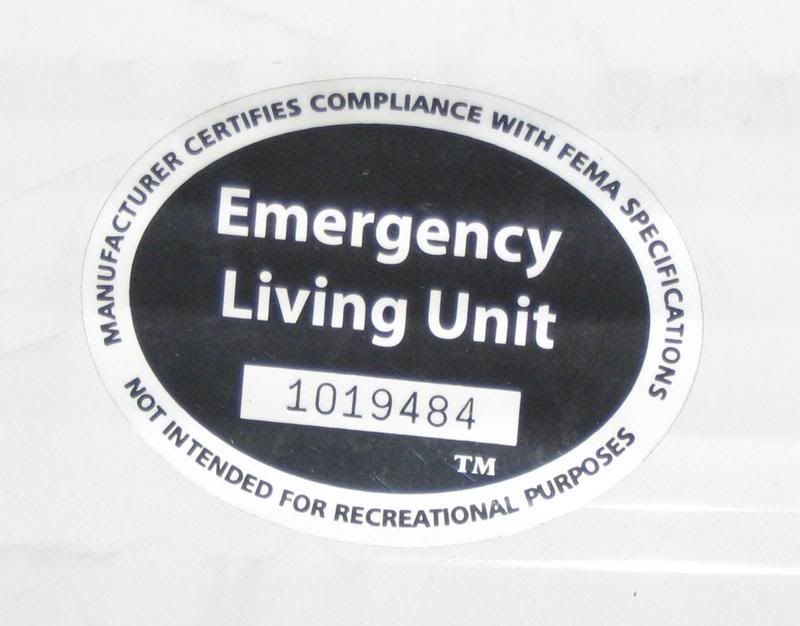
Emergency Living Unit Blog Crue

Back when I started Tin Can Trailer Trash someone wrote that I was the only person in New Orleans blogging from a FEMA Trailer. I didn't know if that was true then and I still don't.

I do know that there are now several other New Orleans Bloggers living in FEMA "Emergency Living Units".

I think we need to Organize.

I propose we establish the Emergency Living Unit Blog Crue
"to unite fraternally all autocampers" 'Emergency Living Unit Residents' and promote "friendliness among campers residents, decent behavior and to secure plenty of clean, wholesome entertainment for those in camp "Emergency Living Units".

The only requirement for membership is to have blogged while residing in a FEMA "Emergency Living Unit".

I know of several potential members and am looking for more. I hope the Blogosphere will do its thing and help me unite all Survivors in ELUBC.

NOLA Bloggers

Tin Can Trailer Trash
Tim's Nameless Blog
Michael Homan
Kalypso The Odyssey
PH Fred at Humid City
Gentilly Girl
Gulf Sails

Other candidates I found on the Internet.

Confessions of a Wannabe Princess
Jason Sampler
Mary-Pat
Ruminations
Paula's Pad
darnola
Kitchen Politics
Pat
Cameron
Aly
BigMac
Cool Will Gee
Rachel
Kevin Gallagher
aimee
David and Beth
Wendy Michele
tdoe

I actually may have found several more potential members, but I couldn't be sure they had actually blogged while living in a FEMA "Emergency Living Unit".

We need to recruit someone to devise "an initiation ceremony that teaches the prospective member the secret handshake, sign, and password. After singing the official song (which still needs to be written) the trailerite will become an official member of the Emergency Living Unit Blog Crue". We are looking for someone to volunteer to develop an official logo and blog banner so that members of ELUBC can identify themselves.

Maybe in a year or two we can organize Bonus March on Washington, just like the old days.

We could use a better name.

Saturday, December 09, 2006

Darkness Continues but Some Progress Is Made.

Darkness at The Trailer continues unabated. We are still without electricity in our Emergency Living Unit.

I'm staying in the Kenner Kondo, but I go back to The Trailer and the house every few days.

Yesterday I made a visit. Work on the house next door is progressing nicely. More good news. down the block construction has started on one of the cleared lots. They haven't done much but they have started. Further down the block another house has its yard all torn up, with big piles of sand in the yard. They seem to be getting ready to complete the work.

Entergy has now been out three times. They identified the problem, the conductors from the manhole to the meter are shorted out. Entergy sort of knows where the short is, it's under our house or our driveway. Entergy thinks it's because the conductors were submerged for however long they were under water or bexause of f;ppd related settlement. Entergy also says its our responsibility to provide a 2 1/2" conduit from their manhole to our meter cabinet. That was a month ago.

We also called FEMA. They said they would send someone out to put up a pole and a meter. The said they would call us back. That was three or four weeks ago. Someone dug a hole next to the manhole and drove a very stout red metal spike in the ground. That was a couple of weeks ago. No call yet.

Not much progress on my part but the neighborhood is starting to show signs of recovery.

Wednesday, November 15, 2006

Movin' on Up.

Since the flood She has been spending much of her time in Atlanta. I have been here, mostly. She commuted here for several days each week and I visited there about once a month. We did that so I could get our office here up and running and She could oversee things there.

She decided she needed to come back to New Orleans, to work more directly on our house. She also decided she couldn't spend a lot of time in the Trailer. She decided to buy a small Condominium in Kenner (or Kennya as one of our Metarie resident friends calls it).

The purchase was an interesting experience.

I guess I should confess I wasn't all that thrilled with the additional expense, additional complications and inevitable delay on getting our house completed. She managed to pull it off and we are now the proud occupants of three and one half residences (An Apartment in Atlanta, a Condo in Kennya, a Trailer in the backyard and the hulk of a House in front of the trailer).

We learned a lot about the state of New Orleans. We learned how hard it was to get insurance, for one thing. Our current home owner's company for the house wouldn't cover us for another property, although if we sold the house we could get coverage on a new house. We contacted one State Farm insurance agent about getting condo insurance, and he agreed to provide it. We went to sign up and give them a check. They suddenly asked if we had any claims in the last 3 years. We had one so they denied us insurance. If we had moved here from Iowa and had no previous claims we would have been able to get a State Farm policy n the same property. I still can't figure out what a claim for a weather related event on another piece of property has to do with anything. If anyone out there has a clue please let me know.

We were able to get insurance from AAA (yes, the American Automobile Association). They were happy to write insurance. Apparently they are one of the few companies actually writing new policies. In discussing it with our new agent he expressed his frustration with AAA's constantly changing underwriting rules which, for example, have stopped him writing policies on the West Bank (apparently they had written too many). Of course he couldn't write a policy anywhere in Orleans Parish.

It turned out her life long streak of good fortune was still with her, because just a few weeks later the electric service at our trailer shorted out.

Friday, November 10, 2006

Her First Arrival

It's been about a year since our trailer was delivered and almost a year since I first slept in it.

It seems about time I told the story of the first time We stayed there.

In the process of obtaining a trailer we apparently inadvertently gave up the opportunity for FEMA to send us a check every month. Talk about poor communication.

Does anyone recall in the aftermath that FEMA or anyone else explained that you had an option of getting a travel trailer or a monthly stipend? Has anyone had any explanation of the options for families? I have a neighbor who asked if he could get two travel trailers for his family of four. He was told NO! He declined the invitation and was instead sent a check for $10,000+ by FEMA with a promise of more to come.

Later I heard that families could get more than one trailer, although I suspect you would need to have 12 kids to qualify.I have written before about how we obtained our trailer through the early return program, and how I worked to get it set up. I finally got everything hooked up and began sleeping there. I was eagerly anticipating her first visit to the trailer. She had been in Atlanta and except for a couple of quick visits had not even really seen the Trailer.

I was confused. She worked very hard to get the trailer delivered and set up, then She said She wouldn't stay in it. She spent time at her mother's when ever She was in town.

Eventually I guess I wore Her down. Given that we had apparently made our bed and had to lie in it. As much as I appreciated he generosity I just couldn't impose on my mother-in law any more. I treasure my privacy and expect the same of others. My mother taught me that after 3 days guests, like fish, begin to stink. I learned that lesson well.

In eventually I got a tentative "I might stay in the trailer". I decided to go all out. I think she needed a romantic diner prepared in the Trailer with linen napkins and table cloths. I thought we needed a candle lit dinner.

I had some crystal candle holders we salvaged for the house. I also had already procured (some surreptitiously salvaged) stainless steel tableware and some almost forgotten unused china, which resulted from an aborted venture in Florida.

All I had to do was go shopping for some linens, prepare a menu and hide my anxiety.

The Linens were relatively easy, only a few places were open the (it was early December). Kmart was open and close by so was Big Lots. They were closest to the Trailer. I visited both. At Big Lots I bought some blue candles and some decent towels to supplement the thin, small FEMA towels. At Kmart I bought a Martha Stewart table cloth and napkin set. I was almost set.


I also had the salvaged Baccarat Champagne flutes and obviously need some Champagne to go with them. That was easy enough. The the menu was harder. I had yet to come up with any decent pots and was limited to the FEMA supplied Coleman camping set.
Dinner would be a simple affair, a simple green salad, baked pork chops and a microwave vegetable. The pork chops were a recipe I had started using when going to pick her up at the airport. The long baking time allows for a trip there and back.

Her flight was in the evening. We generally travel in the evening, if possible, to avoid the impact of delays and to get the most out of the work day. I set off to pick her up in the dark, with the table set pork chops in the oven and Champagne in the fridge.

I wasn't sure she would let me take her to the trailer. I was the only person living within several blocks and the ride home was pretty scary in the night. block after block of unlighted houses with about half of the street lights out.

Fortunately coming from the airport you can get to out house down West along Robert E. Lee and since parts of Lakeshore, Lake Vista and Lake Terrace had not flooded that route didn't look so bad, although many many people had not yet returned even to Metarie and although things were definitely better in Metarie it was still dark dark dark.
I needn't have worried, everything turned out just fine.

Thursday, November 09, 2006

Big Iron

I love cast iron skillets. For a long time I didn't have any. Several years ago, when visiting my mother, I mentioned to her that I always liked cast iron skillets and had never had one. The next Christmas I got two brand new cast iron skillets, a small one and a large one.

One of the keys to using a cast iron skillet is that they need to be "seasoned". That is basically creating a coating of burned on grease which fills the pores of the cast iron and creates a "no stick" surface. Seasoning, cleaning and care of cast iron cookware is almost a sacrament of Southern Cooking. Many cooks will assert with absolute confidence that there is only one true way to season and clean a cast iron skillet.
Cast iron cookware has many unique qualities. It distributes heat very evenly. It holds heat well, so well that if you turn up the heat too high you can't get it to cool off quickly. It does take some time to heat up so you need to preheat the pan to avoid sticking. It's also cheap, 6" skillets start at about $4.00 and Sears has a set of 3 for $17.00.As we cleaned out our house we set aside the things we though we could salvage. One of the things I put in the carport was my muddy, rusty cast iron skillets. Still full of flood water when I found them. I wasn't sure I could save them. Since cast iron is so cheap, I probably should have replaced them. It wouldn't have been the same. They wouldn't have been the ones my mother gave me and they wouldn't have survived the flood. I set them aside to try to clean.

After about a year I finally got around to recovering my cast iron skillets. First I scrubbed them with a Brillo pad (it was cheaper that SOS), until almost all of the rust was gone. Then I ran them through the dishwasher. That was to remove more rust and to disinfect them, but also so She would be happy and possible eat something cooked in them. Finally I scrubbed them again and dried them.

The final step was to season them. There are several methods of seasoning cast iron

The most popular and easiest is to simply coat the cookware in Crisco and bake it. I think lard would work better but it's a little hard to find these days. There are different opinions about how high and how long. I favor a high temperature for a long time. I think the higher the temperature the better. The longer the better. Some people even recommend using a self cleaning electric oven. You set to self clean which will get very hot, hot enough to turn baked on food to ash. We doesn't have a self cleaning oven, so I just cranked it all the way up and went to bed.
I got it a little too hot. After a couple of hours the whole place filled with smoke from the smoldering Crisco. It didn't cause any lasting damage but it did work. It seasoned the pans very well. The seasoning created a hard black coating over the entire surface of the pan almost as slick as Teflon.
The proof is in the eating. cast iron is the best way to cook a real southern breakfast of bacon and eggs.

Friday, October 27, 2006

The Night the Lights Went Out

I've been in Atlanta for a few days. On Thursday night we went back to the Trailer. When we got there is was dark, not just the sun going down but the trailer lights and the carport automatic lights did not come on.

Not Good. But not that bad. I've had similar problems before with the trailer blowing a breaker or Entergy losing power, although I thought since summer was over that particular problem would subside.

I checked that panel in the trailer the main breaker was tripped. I reset the breaker and still no power.

I checked the panel in the house and all of the breakers were fine. There must be an Entergy outage in the area. I went out and checked around the neighborhood.

I was wrong. The power was out but only in my house. There were circuit breakers blown in the trailer but not in the house.

She called Entergy and they told us they would send someone right out, sometime between 7:30 and 10:40. Yes that accurate 10:40. I have no idea how they arrived a that particular time span.

We decided to go store the groceries we had just bought. Entergy said we didn't need to be there. At about 7:15 She got an automated call on her cell phone saying that the problem had been corrected. We turned around a headed back to the Trailer.

When we got there still no power. I checked and Entergy had indeed been there. They removed the seal from the meter but had not done anything else. We called Entergy again. Again they said they would send someone out before 10:40. I decided to stay and if necessary spend the night as we could not be sure what Entergy would need when they came back out.

She decided to wait for a while and see what happened. About 15 minutes later another Entergy guy showed up in a bucket truck. That seemed a little odd as our electric service is underground.

It took him about 15 minutes to determine that all of the wires from the manhole in the sidewalk to the house were dead. He tried several ways to get the service back up but it was useless. He offered to have another larger crew come out and see if they could replace the wire or rig a temporary supply that night, but he said he it would be late, very late and he wasn't sure they could really do anything anyway. He suggested we go stay somewhere else, if we could.

She could go to her mothers I was considering staying in the trailer anyway, it was cool and I didn't need electricity to sleep. Eventually I realized that I did need electricity for hot water so I went with her.

The next morning I dropped her off at work and headed to the house. Entergy was there setting up when I got there. Two guys gave me a run down on what they were going to do and the possible things they could do to get us back up. They also said they might not be able to fix it.

I went about some chores I had to do and let them work. In a little while they came and told me it was no good. There was a short in the underground cable either under the house or under the driveway. I would need to get an electrician to replace the service.

They gave me their numbers and told me since I was living they they would put me at the top of the list as soon as I was ready and they would come and hook me up.

Great. I am now trailerless.

Tuesday, October 10, 2006

Head'em up, Move'em out

I've written before that my neighbor has been trying to get rid of his unused FEMA trailer for months. It's gone. It disappeared over the weekend. I hope FEMA came and got it and it wasn't stolen.

The odd thing is I didn't notice it was gone immediately. I noticed on the way out Sunday but I didn't notice it on the way in or out Saturday, any of several times. It couldn't have disappeared while we slept. You'd think I would have noticed something that big missing.

This is doubly odd because on the way home Saturday afternoon I saw a crew moving a trailer out down the street.

That's at least two less trailers in the neighborhood.

Wednesday, October 04, 2006

Trailer Tweaks

Living in the trailer means we have to enjoy the simple pleasures we can.

One of the first things I did, After spending a couple of night on a soft foam mattress with a hard plywood under it. Was to install a thermal foam mattress cover. It really make the bed tolerable. It wasn't that expensive and I'll probably move it back into the house when we're done.


While cleaning out the house we discovered we had bought a set of Noritaki china. We had bought it for an aborted Florida condo and stored it away, high in a closet. Using real china makes dinner a little special, even if you do have to wash it by hand.


One of the most important is the salvaged Baccarat Dom Perignon crystal champagne flutes, for Her Favorite Beverage. The box didn't survive but the flutes did. We use them every time we celebrate being together. They were a gift for for serving on the board of a professional organization. They were very kind to include two and make mention of me when they were presented.


Every time we take them out we toast our future. We take them out often.

Monday, October 02, 2006

Cold and Damp

With the recent cooler weather, I recall last fall and winter when I first started living in a trailer.

We were in the midst of a severe drought, unless you were living in a trailer.

Travel trailers are designed to be sealed up for storage an travel. They are also designed to minimize the enclosed volume. This means moisture does not escape from a trailer and there is a limited ability for the trailer to absorb additional moisture. Left closed up even in moderate to cool outside temperatures moisture accumulates in a trailer much more than in a house.


Moisture is generated from cooking both by water vapor from the food and water vapor formed by the combustion of propane. Moisture is obviously introduced by washing and bathing. Just sitting around people give off moisture in their breath. I could tell the difference in the interior environment when She was there. The moisture released by two people results in an entirely different feel.

In a house this does not matter because the amount of moisture is a relatively small compared to the volume of the house. In an old house in New Orleans you can barely keep the heat in. You can often feel the wind blowing through the house. At least I could in the camel back we lived in uptown.

The only solution is to actively operate the trailer in response to the weather and use. You can run the air conditioning all the time to keep the interior dehumidified. That's pretty much what we did all summer. Last fall I opened the trailer doors, windows and hatches up to allow the moisture to escape. It worked pretty well as long as temperatures were moderate and humidity was low. It doesn't work well when temperature are low or humidity is high.

Thursday, September 21, 2006

How I Became Trailer Trash - Part 3:

Hooking Up

Our trailer was left sitting in our neighbors driveway, there was no place to put it on our lot. The entire front yard was full of debris from the ongoing gutting. No one had been by to haul the debris. The Trailer was too tall for our driveway.

No FEMA krewe would come by to hook up up. Our Trailer was a "Drag and Drop". We were on our own.
We had no idea how to hook up a trailer, never having been in one until recently. We quickly discovered we needed a thirty amp electrical outlet, a water hose and a sewer connection to be able to use the trailer. We also needed place it, level it, and anchor it to the ground.

We wanted it in the back yard, we thought it would be more private and secure, besides it wasn't full of stinky debris. It turns out that we couldn't put a truck on the hitch and push it into the yard. Since the guys were still gutting the house, we got them to simply roll the trailer into position. I think we'll have to get it out the same way we got it in.

Since this was early November I hadn't seen a lot of trailers, FEMA was just beginning to deliver them. The FEMA install we are all now familiar with was not very common. FEMA had only delivered a few trailers and they were mostly going to critical people. I went to the Marietta Georgia RV dealer we had visited to check out trailers and bought a couple of adapter fittings for the sewer connection.

On one of my early flights back in to town I happened to sit next to a guy from North Carolina who was installing FEMA trailers. He was returning from a visit to his family. He explained how they installed trailers. He offered to install the trailer for me. I got his number and had my guys call him .

My Contractor found another guy who said he could install the trailer. He was a trip. He showed up in a Lincoln, wearing the gold chain and looking like he stepped out of the Sopranos. They had no material and spent the better part of the day gathering concrete blocks, wood blocking, plastic pipe and electrical supplies. They also had few tools, fortunately I had most of mine, although some of them were a little rusty.

After two full days the trailer was sort of set up. I had power, water and a sewer connection. I would be able to spend the night in the trailer, using FEMA provided linens and plastic dishes.

I still had to learn how to operate The Trailer.